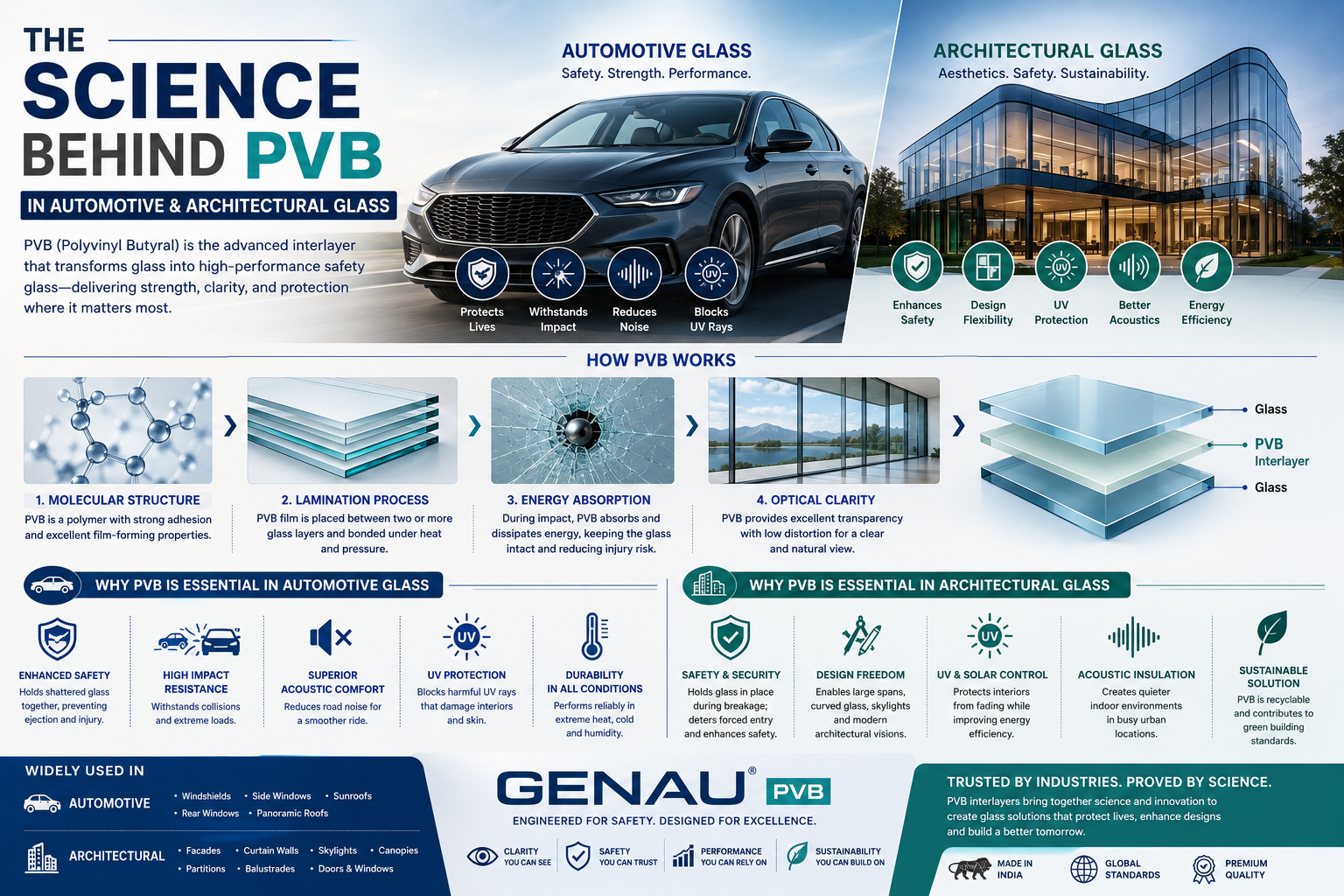
What Is PVB?
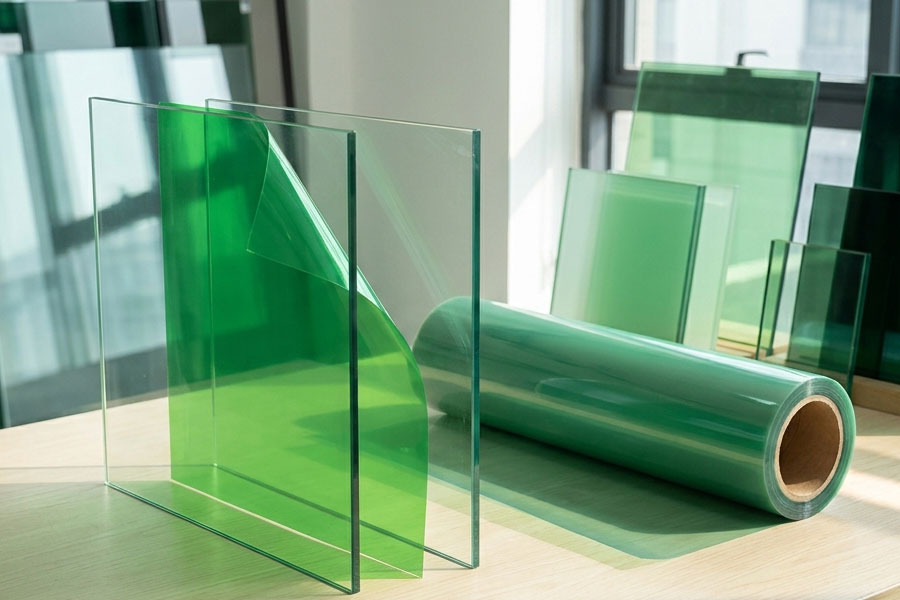
Polyvinyl Butyral (PVB) is a transparent, highly durable polymer interlayer placed between two sheets of glass. During the lamination process, heat and pressure permanently bond the glass and PVB into a single, high-performance laminated glass unit.
Unlike ordinary glass, laminated glass with a PVB interlayer remains intact even after impact. Instead of shattering into dangerous sharp fragments, the broken pieces adhere to the PVB layer, significantly reducing the risk of injury.
This unique property has made PVB the preferred interlayer for automotive windshields worldwide.
How Does PVB Improve Automotive Safety?
The science behind PVB lies in its exceptional combination of adhesion, elasticity, and energy absorption.
When a windshield experiences an impact from road debris, an accident, or another external force, the glass may crack, but the PVB layer absorbs a significant portion of the impact energy while holding the broken glass together.
This offers several important safety benefits:
– Prevents dangerous flying glass shards.
– Reduces the risk of passenger injuries.
– Helps occupants remain inside the vehicle during severe collisions.
– Maintains the windshield’s structural integrity, supporting proper airbag deployment.
– Improves vehicle roof strength in rollover accidents.
This combination of flexibility and strength is why laminated PVB glass has become an essential safety feature in modern vehicles.
More Than Just Safety
While safety is the primary purpose of PVB, its advantages extend well beyond impact resistance.
UV Protection
PVB blocks more than 99% of harmful ultraviolet (UV) rays, helping protect passengers from prolonged UV exposure while preventing fading, cracking, and discoloration of dashboards, upholstery, and other interior materials.
Noise Reduction
Modern cities are becoming increasingly noisy. PVB acts as an effective sound-dampening layer, reducing road noise, engine vibrations, and wind sounds entering the cabin. Special acoustic-grade PVB films further enhance passenger comfort by creating a quieter driving experience.
Optical Clarity
High-quality automotive PVB is manufactured with extremely tight thickness tolerances and excellent optical properties. This ensures crystal-clear visibility without distortion—an essential factor for safe driving and accurate performance of cameras, sensors, and ADAS technologies.
Improved Security
In cases of attempted theft or vandalism, laminated glass with PVB is much more difficult to penetrate than ordinary tempered glass. Even when cracked, the interlayer continues holding the glass together, providing additional resistance against forced entry.
The Science of Lamination
Why Quality Matters
Not all PVB films deliver the same performance.
Consistent thickness, excellent adhesion, moisture control, optical clarity, and reliable processing characteristics are critical for producing defect-free laminated glass.
High-quality PVB helps manufacturers reduce waste, improve lamination efficiency, minimize optical defects, and consistently meet stringent automotive safety standards.
For automotive glass manufacturers, selecting a trusted PVB supplier is just as important as choosing the right glass itself.
The Future of Automotive Glass
As the automotive industry moves toward electric vehicles, autonomous driving, and smarter mobility solutions, the role of PVB continues to evolve.
Today’s advanced PVB interlayers can offer:
– Enhanced acoustic performance.
– Better UV protection.
– Improved optical compatibility for cameras and sensors.
– Greater durability and long-term reliability.
– Support for next-generation laminated glass technologies.
These innovations ensure that PVB remains at the heart of safer, quieter, and more comfortable vehicles for years to come.